In short: Staging your home for sale means presenting it as somewhere buyers want to live rather than a property they are inspecting. The living room does most of that work. It is the hero shot in your listing, the first room most buyers walk into, and the space where they decide whether they can picture themselves there. Get the scale, the flow and the light right in that one room and the rest of the campaign follows.
We have been staging Auckland homes since 2003, through every kind of market. In that time one pattern has never changed: the living room sets the tone for everything a buyer thinks about the rest of the house.
Most buyers meet your home on a screen. They scroll a listing, they stop on one photograph, and that photograph is almost always the living room. If it reads as generous, light and considered, they book the open home. If it reads as empty, cramped or awkward, they scroll on and you never know they existed.
Then they arrive in person, and the same room has to deliver a second time. Research commonly cited across the New Zealand staging industry suggests buyers spend up to 40 per cent longer at open homes in staged properties, and that staged homes sell noticeably faster and for more than unstaged equivalents. Time in the room matters. A buyer who lingers is a buyer who is starting to arrange their own life inside your walls.
That is the real job of staging a home for sale. Not decoration, but emotional permission.
After thousands of Auckland living rooms, these are the things that consistently move a buyer, in the order they register them.
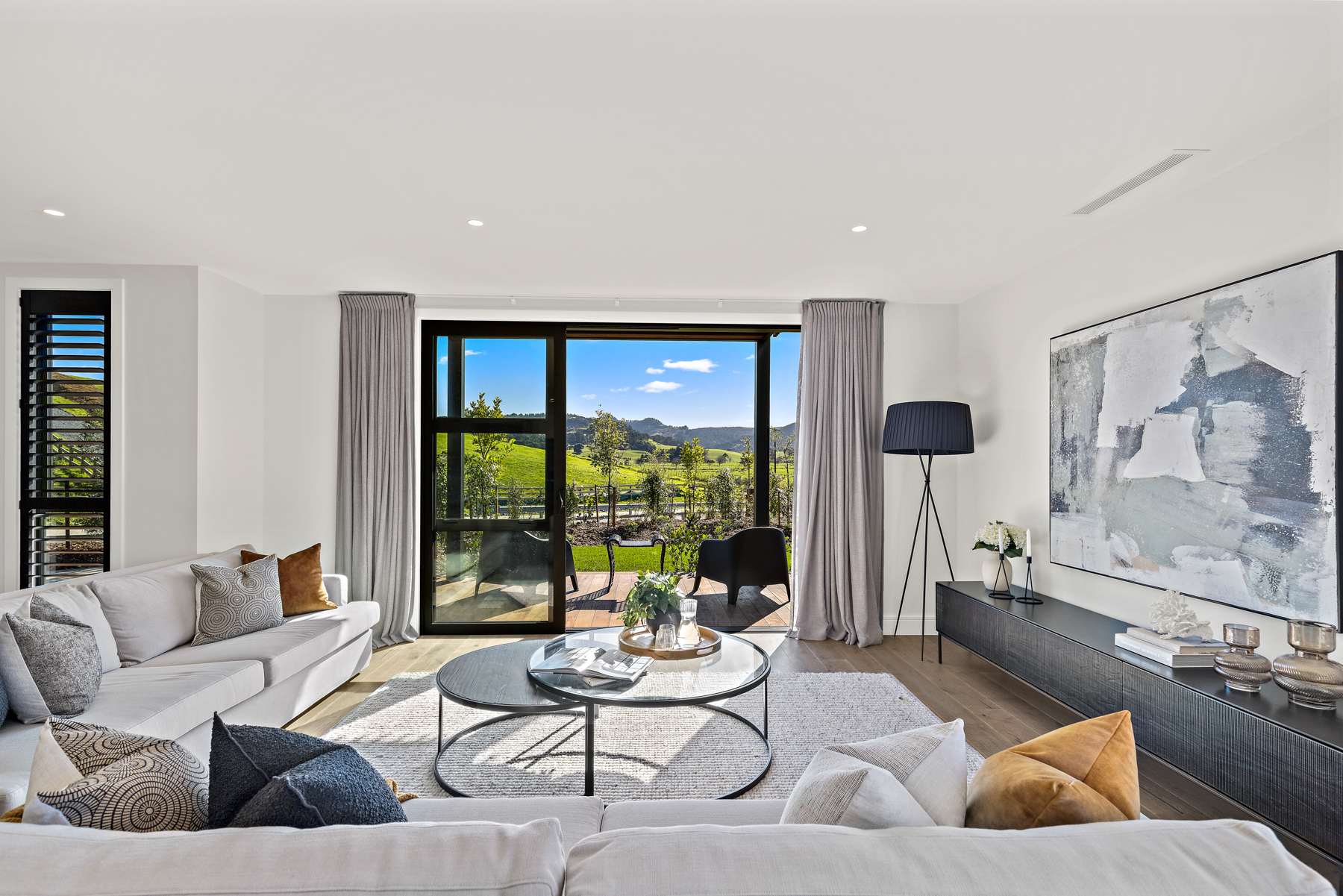
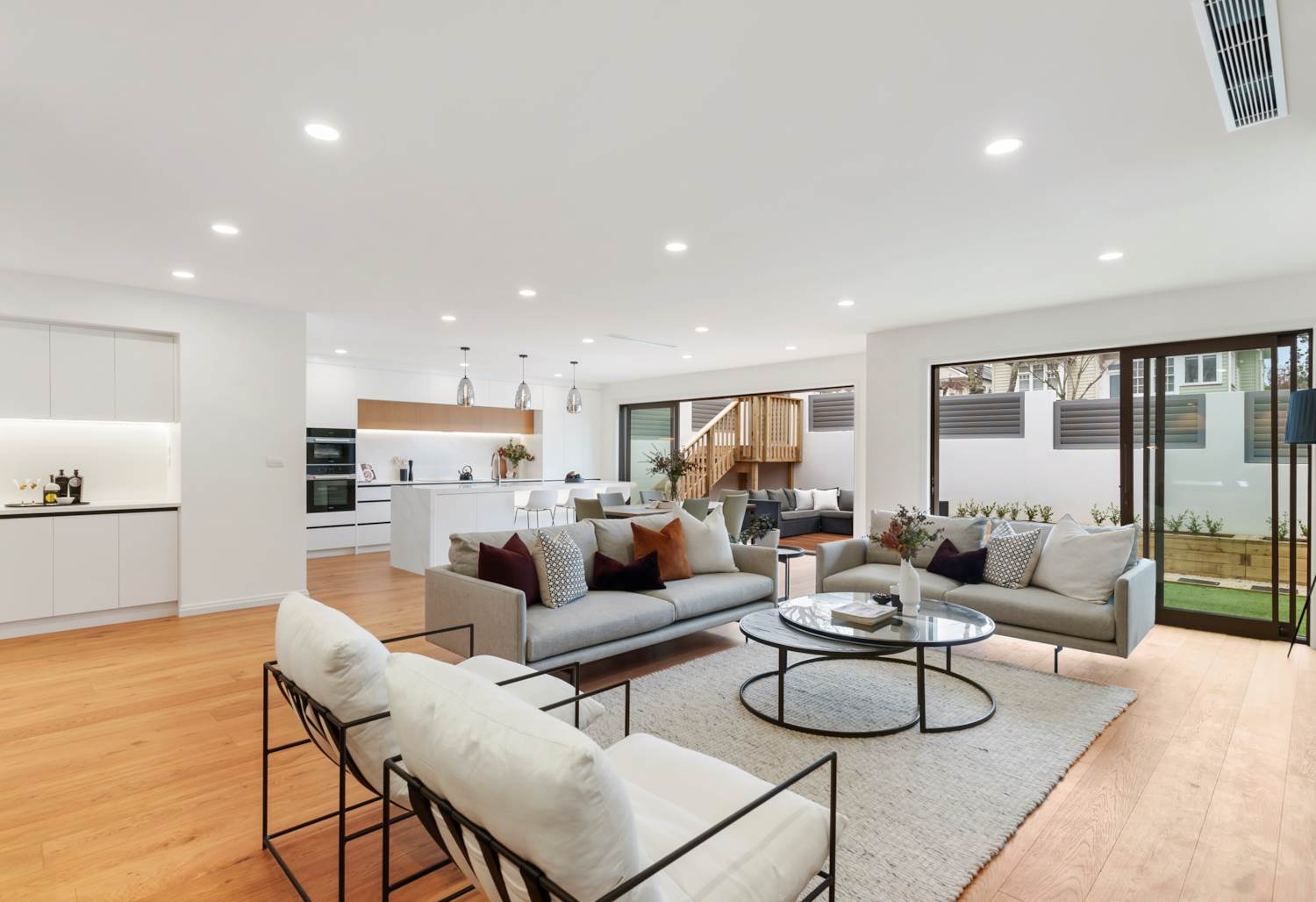
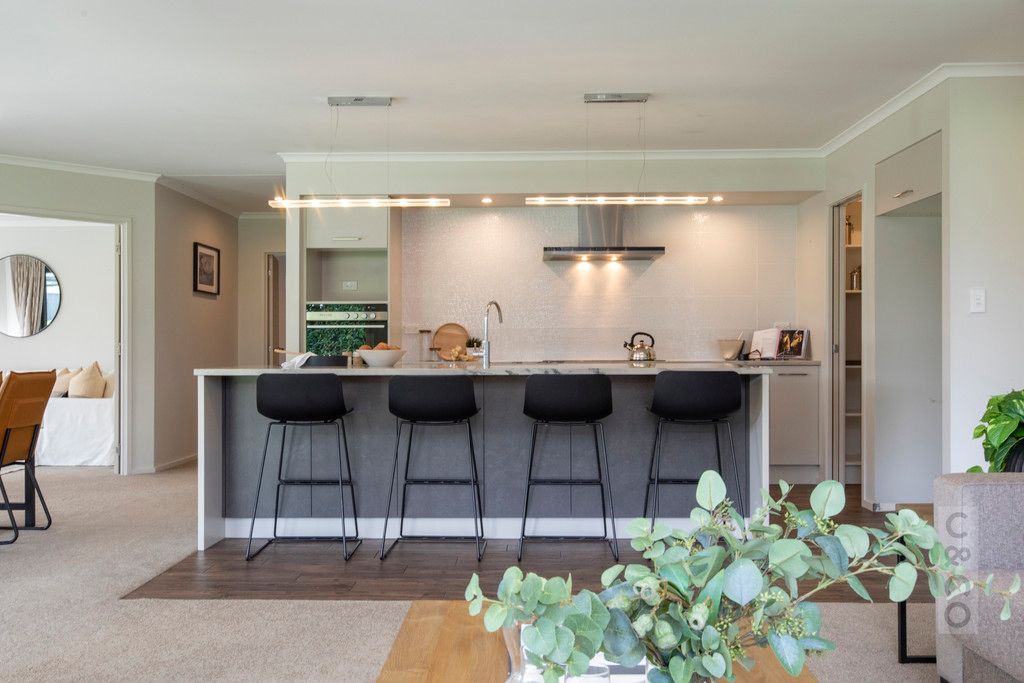
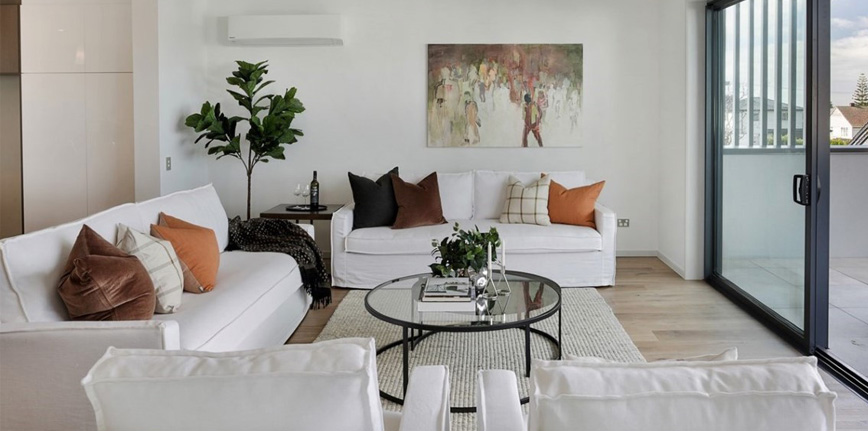
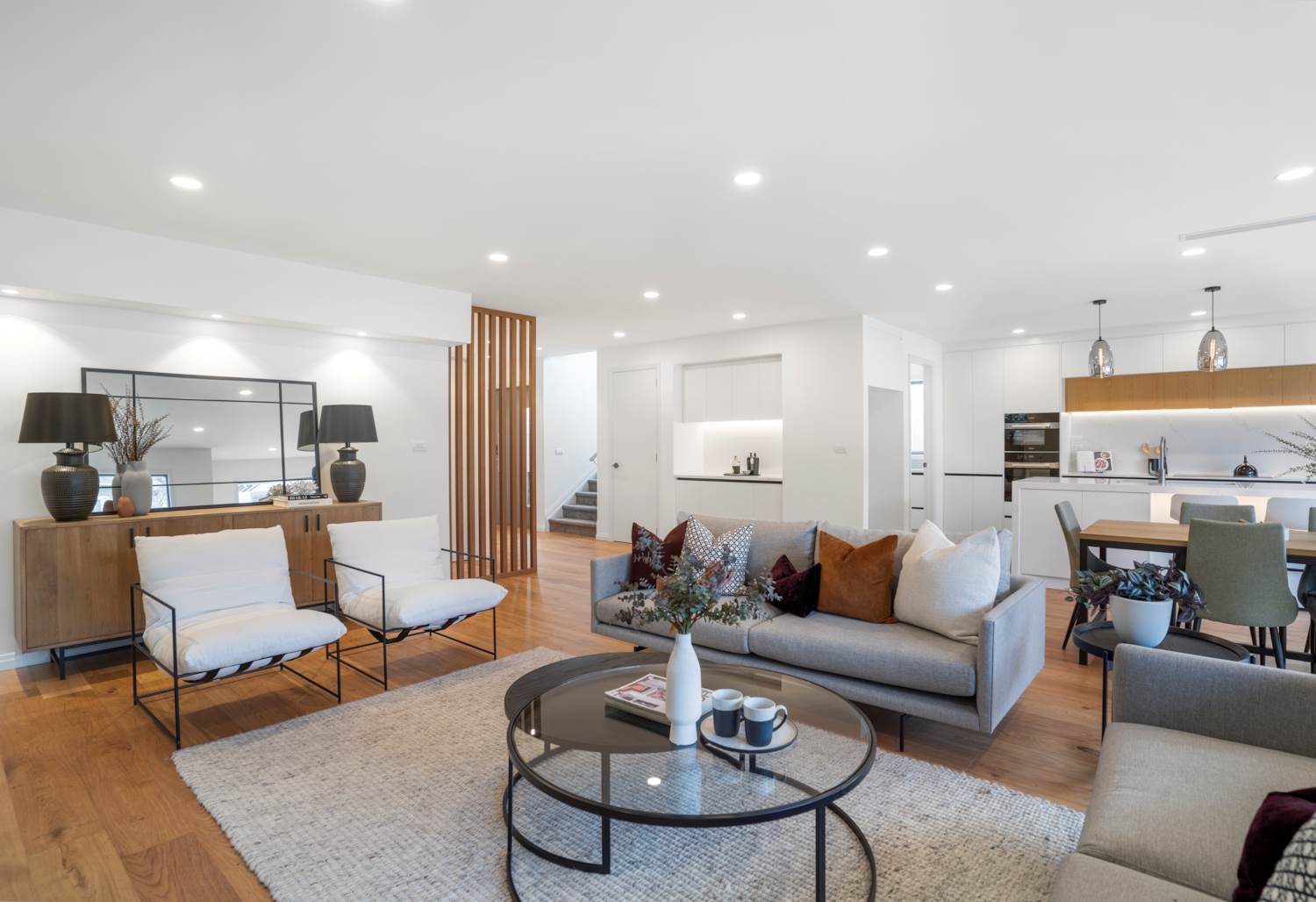
An empty room looks smaller, not larger. Without furniture there is nothing to measure the space against, so buyers read bare floor as "will my sofa even fit?" The fastest way to make a living room feel generous is to place furniture that is correctly proportioned to it: a sofa that fills the wall it sits against, a rug that sits under the front legs of every seat, a coffee table that holds the arrangement together.
Undersized furniture is the most common error we see, and it makes a good room look like a compromise.
Buyers walk a room before they look at it. If they have to sidestep an ottoman or squeeze between a chair and a wall, the house registers as tight even when the floor plan is not. Good staging leaves clear, obvious flows between rooms and spaces, from the entry through to the windows and on into the next room. Nothing blocks a doorway or a view line. This matters even more at an open home, where several groups of buyers can be moving through the property at once. When rooms and spaces flow into one another, people move around each other easily and the house feels generous rather than crowded.
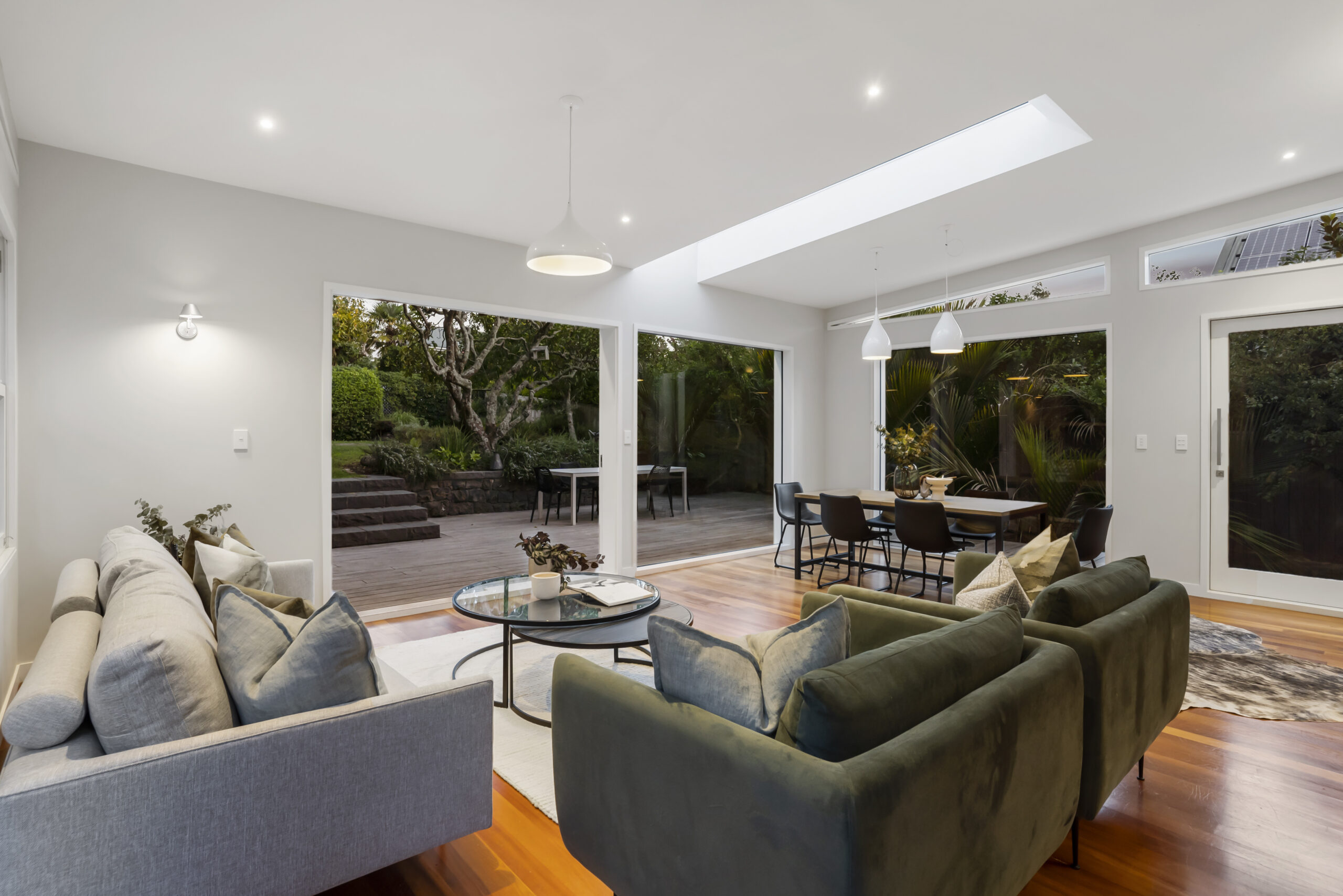
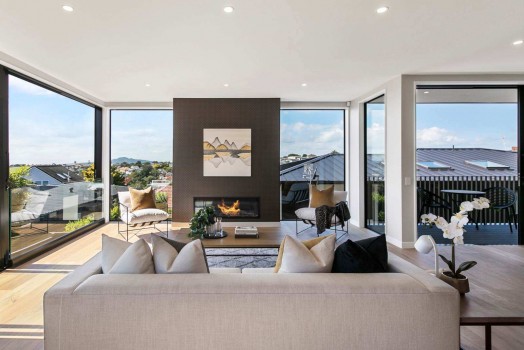
Auckland living rooms usually have one strong source of natural light, and the way a room is furnished either protects that light or quietly steals it. We pull the window treatments fully clear, keep the pieces nearest the glass low so nothing blocks the light or the view, and choose rugs and finishes that lift the light back into the room rather than absorbing it. Lamps are placed for the evening viewings and for the photography, so the room holds up at any hour.
Every living room needs one thing the eye lands on: the fireplace, the view, a large piece of art above the sofa. Arrange the seating to acknowledge it. Rooms with two or three competing focal points feel restless, and buyers cannot say why, only that the room did not sit right with them.
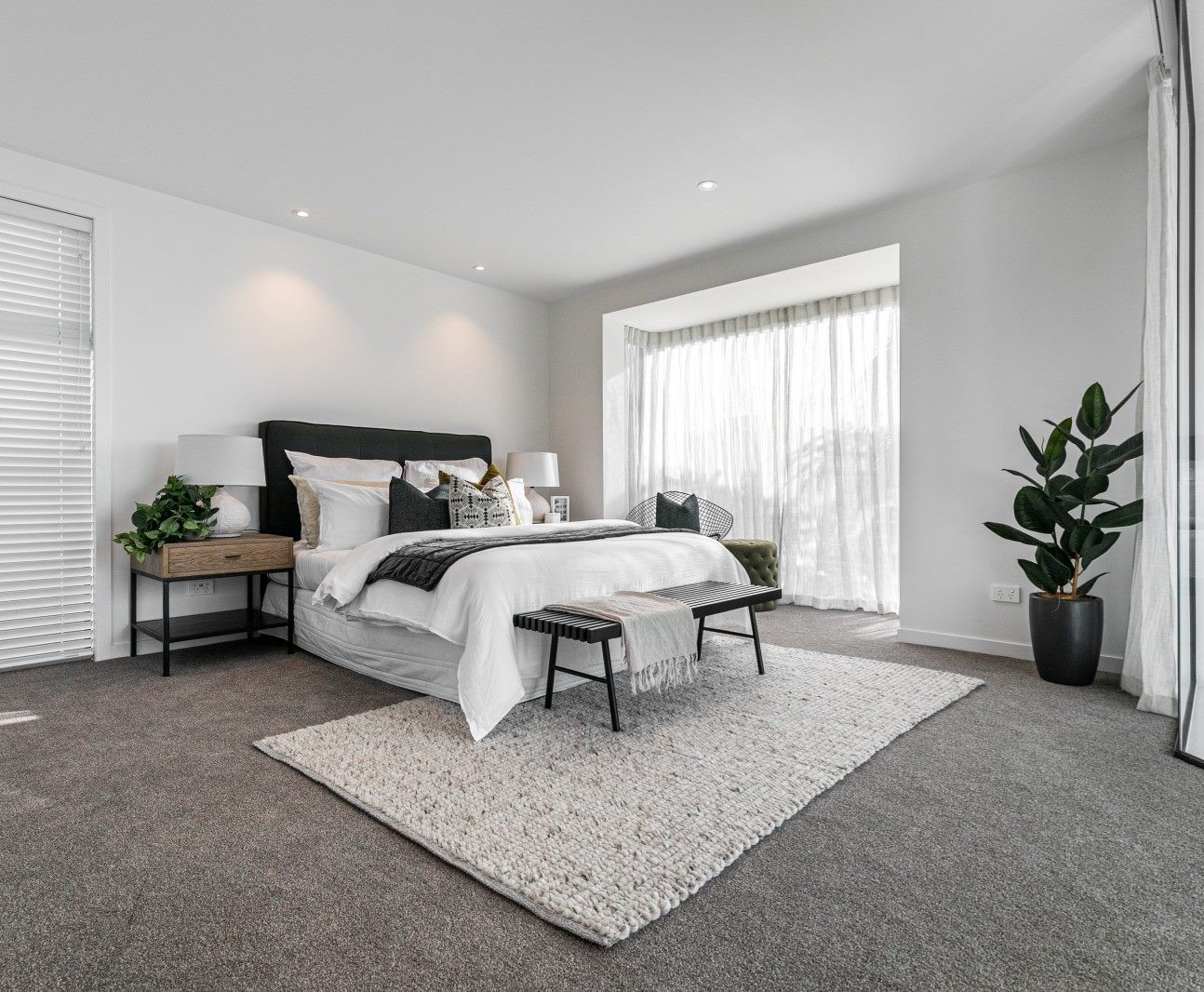
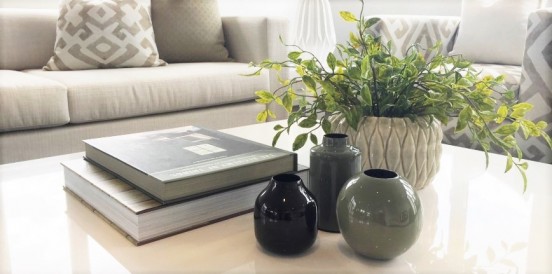
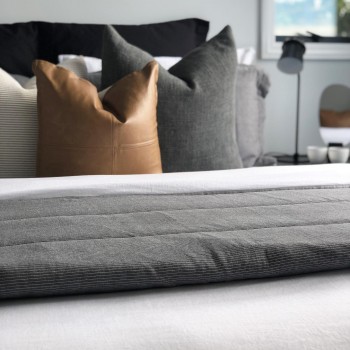
This is where sellers most often overcorrect. Cushions in five patterns, a gallery wall, family photographs, a shelf of ornaments. Every one of those asks the buyer to look at your life instead of imagining theirs. Curated and calm outperforms full and busy, every time. A considered arrangement of a few appealing pieces will always photograph better than a room trying hard.
There is real value in tidying, clearing and rethinking your own living room, and every seller should do it. But there is a ceiling to what your own furniture can achieve, because your furniture was chosen for your life, not for the buyer viewing your home in six weeks.
Professional staging changes three things at once.
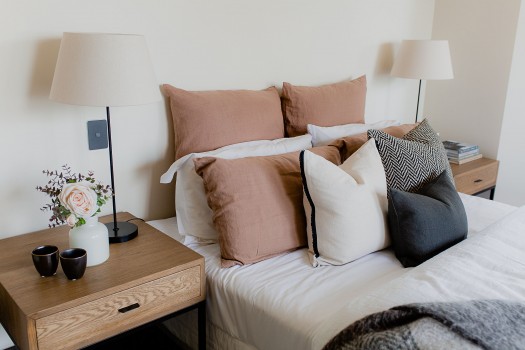
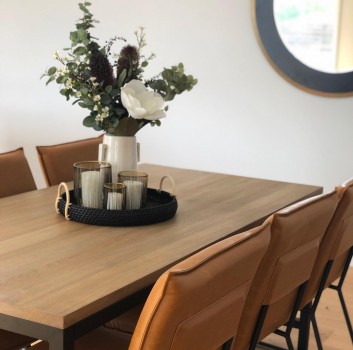
The furniture itself. We hold a huge range of the latest styles of on trend furniture, which means we can tailor a scheme to suit your property perfectly, rather than working from a set list. A restored villa in Grey Lynn and a new apartment in the city need entirely different schemes, and no two properties we stage are furnished the same way.
Access to pieces buyers have not seen before. We work with hundreds of trade-only suppliers and custom manufacturers, which means the room does not look like a showroom floor that buyers have already walked through on the weekend.
A designer's read of the buyer. Our designers style for the demographic most likely to buy your property. That is a different decision for a family home in Remuera than for a first-home apartment, and it is the judgement that turns a well-furnished room into a persuasive one.
The results tend to speak plainly. One Auckland property sold on its second open day after two months on the market unstaged with no interest. Another sold at auction for $2.1 million. A developer with seven multi-million dollar penthouses in the Eastern Bays had made no sales during construction, and moved them all shortly after the properties were staged. You can see the range of what that looks like in our portfolio and in what our clients have said.
Two weeks before you go to market is the comfortable window. That gives time for an onsite consultation, for the scheme to be selected and prepared offsite, and for staging day to sit well before your photography rather than on top of it.
An average three bedroom home is staged in four to five hours on the day, and furniture stays for a five week hire period, which covers a standard Auckland campaign. We can move faster in a genuine emergency, though it is not the way to get the best result from your property.
One thing to know early: we stage vacant properties only. Mixing hire pieces with a seller's own belongings compromises the result the staging is being paid to deliver, so the property needs to be empty before we arrive.
What does staging a home for sale actually involve? An onsite consultation, a furniture and styling scheme selected specifically for your property, offsite preparation, installation on staging day, the hire period through your campaign, then packup and removal. At The Look, transport, insurance, maintenance, packup and removal are all included, so there is nothing to add afterwards.
Does staging really increase the sale price in New Zealand? Figures widely cited across the New Zealand industry put staged homes at 5 to 10 per cent above unstaged equivalents, selling up to three times faster. On an Auckland median price, a small percentage shift is a substantial number, which is why most agents now recommend staging as standard.
How far ahead should I book? Contact us at least two weeks before you go to market. Peak spring and autumn selling seasons book out early, so earlier is better.
Can you stage while I am still living in the property? No. We stage vacant properties only, because the result depends on the whole scheme working together.
Can I just stage the living room? It is the highest impact single room, but buyers walk the whole house. Staging the main living space and leaving bedrooms bare creates a jarring contrast. We will tell you honestly what your property needs at the consultation.
If you are preparing to sell in Auckland, the fastest way to know what your property is capable of is to have someone experienced stand in it. Our onsite consultation is free and there is no obligation.
Request your free onsite quote or call us on 09 302 2400.
Learn more about our staging service, who we are, and how home staging accelerates property sales in New Zealand.