With Kate O'Connor, Interior Designer and Owner at The Look
Ask a professional interior designer how to lay out a bedroom and you will not get the advice you find online. Beds do not automatically go on the longest wall. Curtains do not always run to the floor. Rugs usually do not belong under the bed at all. What actually drives the decisions is the specific room: where the power points sit, what the ceilings are doing, whether the floor is timber or carpet, and where the door is.
We asked Kate O'Connor, interior designer and owner of The Look, what she really does when she walks into a client's bedroom. Her answers contradicted most of the standard advice, which is exactly why they are worth reading.
The advice you will see everywhere is to put the bed on the longest uninterrupted wall. In practice, the decision is usually made by something far less romantic.
"Where the power points sit generally dictates which wall the bed goes on, because that is what your bedside lights have to plug into," Kate says. "Every so often the electricians have put them somewhere that makes no practical or aesthetic sense, and then you are working around it."
After that, the priorities run in a clear order:
None of this is about maximising floor area. It is about what you see first, and whether the room functions at seven in the morning.
When Kate walks into a client's bedroom for the first time, she does not start with paint charts.
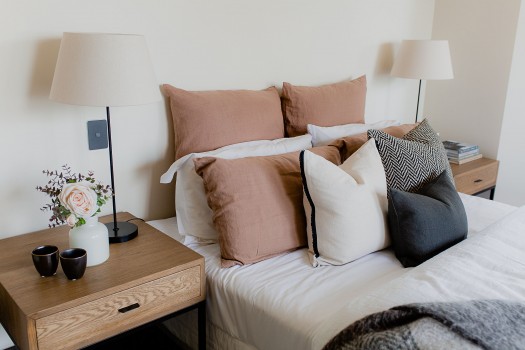
"The bed is the visual and functional focal point of the space, so I look at the bed layout and styling first. That is where the highest impact change is."
It is a useful principle for anyone redoing a bedroom on a budget. Sort the bed, its position, its scale, what is on it, and a surprising amount of the room resolves itself.
The internet is confident that bedroom curtains should run floor to ceiling. Sometimes they should. Often they should not, and in a lot of Auckland housing stock they will actively make the room worse.
The deciding factors are the style of the house and the size of the window.
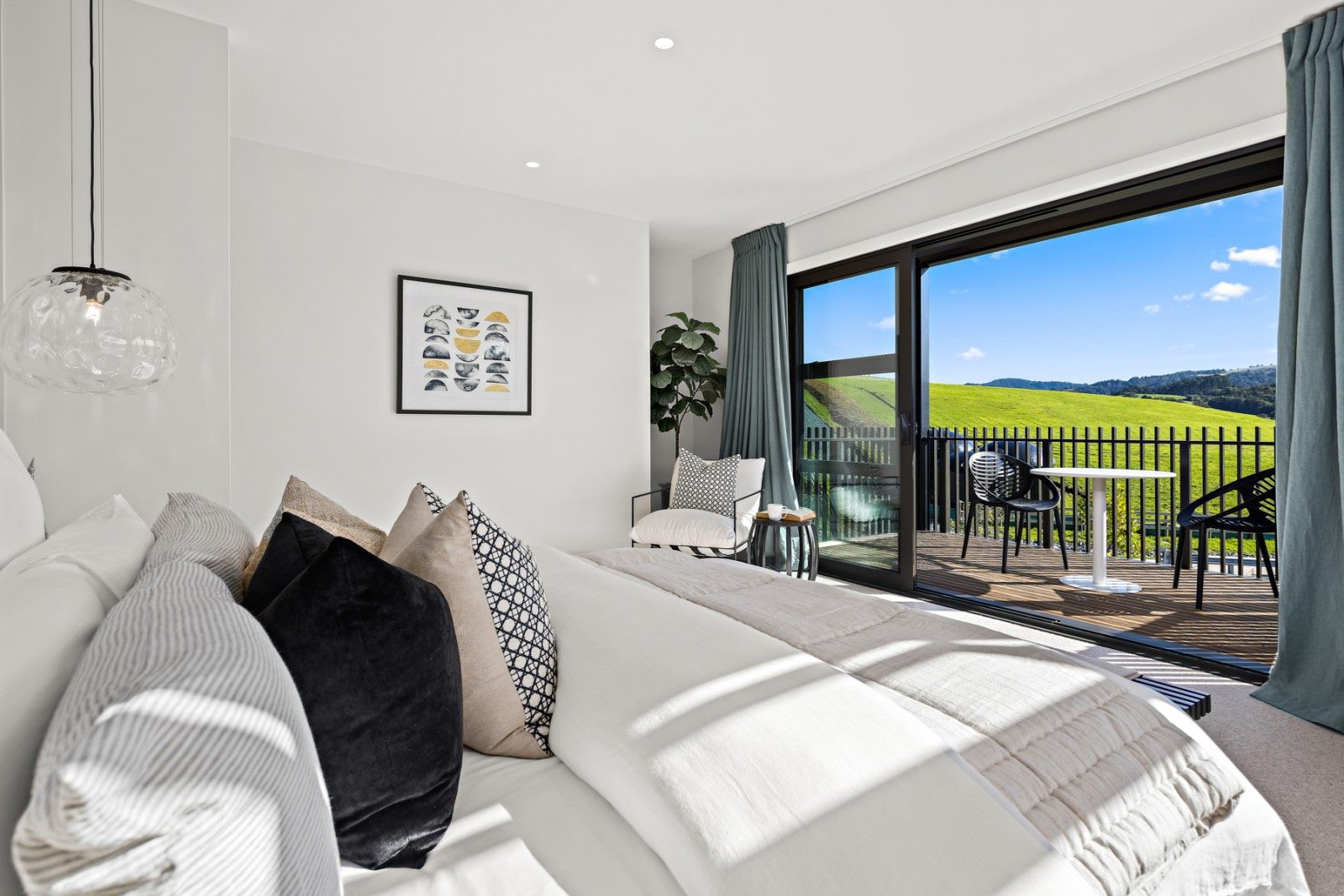
Contemporary homes. Large windows on square set walls, with no scotia or cornice between wall and ceiling, look excellent with recessed ceiling-mounted curtain tracks so the fabric runs the full height. You can get a similar result with wall-mounted tracks fixed just below the ceiling.
Character homes. Here the curtain rail usually sits 150 to 200mm above the top edge of the window frame, depending on the distance between the frame and the scotia. "These homes often have high ceilings," Kate notes, "so full height curtains end up looking overpowering rather than elegant."
Windows that are not full height at all. Anything starting above hip height, small narrow windows, and bay windows above a window seat are far better suited to roman blinds or shutters than to curtains.
If you take one thing from this section: match the treatment to the window and the era of the house, not to a rule you read somewhere.
This is where the standard advice goes furthest wrong, and it is the piece of received wisdom our designers are most direct about.
"The idea that all rugs must sit fully underneath every piece of furniture frequently ruins a room's proportions," Kate says. "The job of a rug is to define a zone and hold visual scale. The right size and placement depend on the room and the furniture layout, not on a formula."
In bedrooms specifically:
A small rug floating in the middle of a carpeted bedroom is doing nothing except making the room look smaller.
The single most common request our designers talk clients out of is open storage.
"Open shelving and minimalist clothing racks look charming in styled photographs," Kate says. "In daily life they add visual clutter, collect dust, and make the space feel busy. Bedrooms need concealed storage to maintain a calm horizon."
That word, horizon, is a good way to think about it. A bedroom reads as restful when the eye can travel across the room without catching on anything.
This is also where design goes beyond what you can buy. One of the pieces we specify most often is an integrated architectural headboard: a full width panel running behind the bed, made from upholstered sections, fluted oak, or tongue and groove, with the nightstands and power built into it.
It is not a decorative flourish. A headboard like that anchors the main wall, hides the cabling that otherwise sits in full view beside the bed, and noticeably improves the acoustics of the room. It also cannot be bought off a shelf, which is why we have them made through our own network of trade-only suppliers and custom manufacturers.
Two specific pieces of advice on spending, and the first one will save you money immediately.
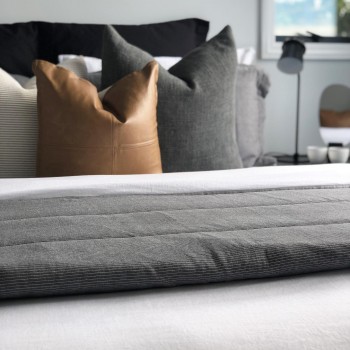
Do not buy high thread count sheets. "Eight hundred to a thousand thread count is largely a marketing gimmick," Kate says. "That money is far better spent on pure, breathable cotton or French linen in the 200 to 400 range." The sheets will feel better and last longer.
Do spend on bedside lighting. Quality dimmable bedside lamps deliver far more atmosphere than an expensive central pendant. A pendant lights the room. Lamps you can dim let you change how the room feels at ten at night versus seven in the morning, which is most of what a bedroom is for.
If there is one thing that separates a bedroom that looks designed from one that looks decorated, it is not the budget.
"Intentional visual negative space," Kate says. "Luxury thrives off restraint. Clearing off surfaces, tucking away power cords, leaving breathable empty space around furniture. It makes even modest architecture feel deliberate and tranquil."
Almost every bedroom we are asked to look at has too much in it rather than too little.
Auckland housing produces a lot of compromised bedrooms: narrow, oddly proportioned, or short on wall space. Three things change in those rooms.
There has been a real shift in what clients are asking for, and it is not just trend forecasting.
The stark minimalism of cool whites and greys paired with blonde oak has given way to warm taupes, muted terracotta, ochre and olive, set against richer wood tones. Alongside that has come a clear move toward deeper timbers, including wood drenching, where timber panelling extends up the walls and across the ceiling.
In a bedroom, that direction works particularly well, because warmth and depth are exactly what the room is for. You can see more of where New Zealand interiors are heading in our look at the latest New Zealand interior design trends.
A recent master bedroom in a Mt Eden villa shows how the pieces come together.
The problem. Heavy, dark curtains dominate the room. Very little visual complexity, so the space felt flat. Not enough clothing storage.
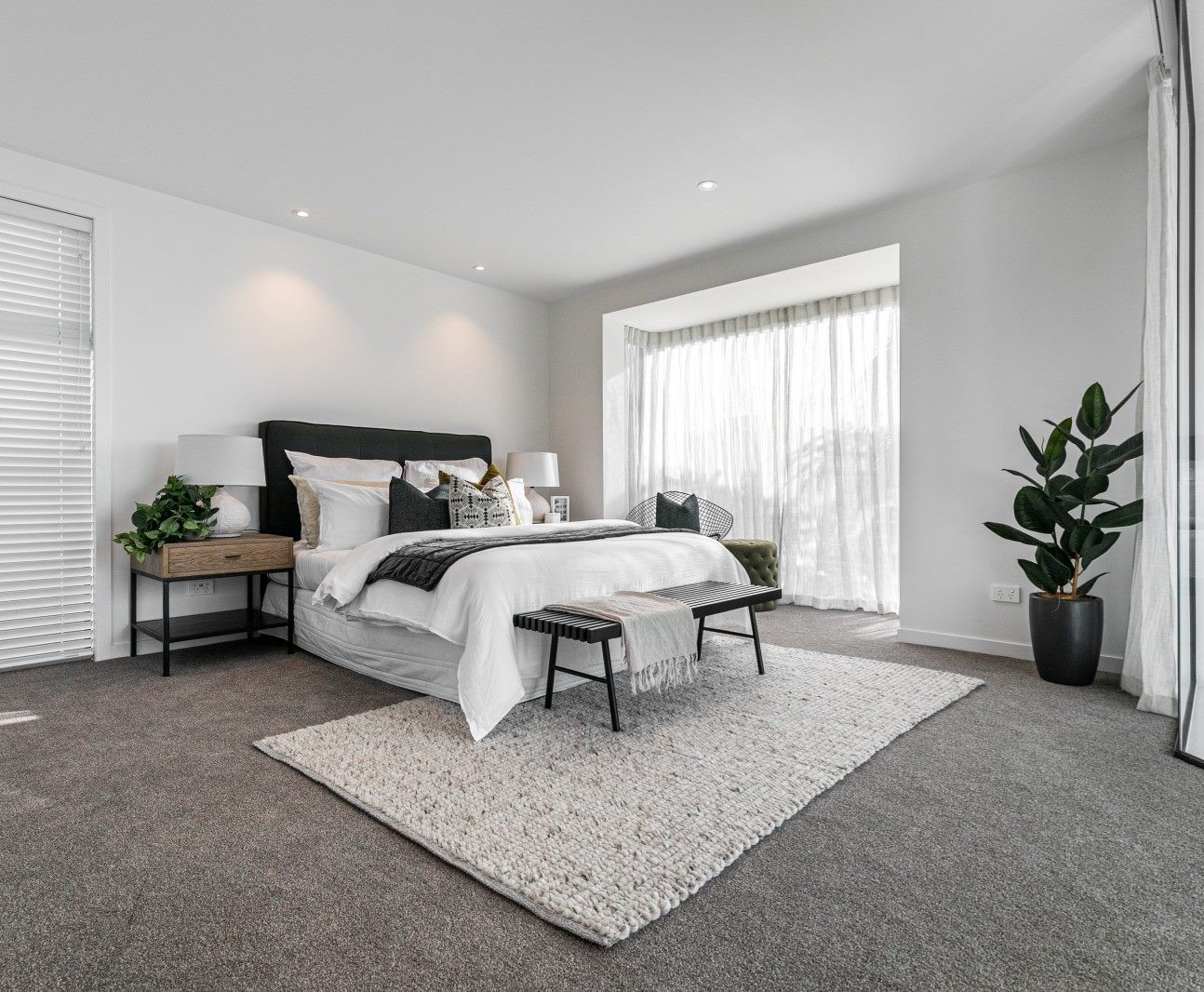
What we did. The work started with the permanent surfaces, building a base to layer on rather than decorating over the top of the existing problems. A warm loop-pile carpet went down. The heavy curtains were replaced with a light, textured linen-look fabric. A calm paint colour was chosen to complement a subtle wallpaper used behind the headboard, which anchored the room.
Custom dressers were designed and made to measure so they sat in balance beneath an existing long, framed landscape painting the clients wanted to keep. With that base in place, an earthy palette was introduced through the focal point of the room, the headboard and the layered bedding. The final move was atmosphere: dimmable, touch-operated statement bedside lamps.
The result. The clients described the finished room as elevated, serene and functional, and said the thing that surprised them most was the difference it made to their day to start and end it in a space that was calm.
Usually where the power points allow, since your bedside lights need to plug in somewhere. Beyond that, if the longest wall faces the doorway, put the bed there so you see the full bed as you enter. Otherwise choose a side wall, avoid the wall containing the door, never sit the bed directly under a large window, and leave clear access to the wardrobe.
Not always. Full height curtains suit contemporary homes with large windows and square set walls, ideally on recessed ceiling tracks. In character homes with high ceilings they often look overpowering, and the rail typically sits 150 to 200mm above the window frame instead. Windows starting above hip height, narrow windows and bay windows over a seat are better suited to roman blinds or shutters.
On timber floors, a large rug under the bed can work well. It should start 100 to 150mm out from the front legs of the bedside tables and border the sides and foot of the bed. On carpet, usually not, unless the room is large enough for a defined seating area. Ignore the rule that a rug must sit fully under all the furniture, because it frequently ruins a room's proportions.
Quality dimmable bedside lamps, premium linens and sheeting, and premium-level furniture to keep your possessions concealed away. What is not worth it is very high thread count sheets, where 800 to 1000 is largely marketing. Pure cotton or French linen in the 200 to 400 range performs better.
Use fewer, larger pieces rather than several small ones, keep the bed frame low to open up the volume above it, and work with a low-contrast palette so the eye reads the room as one space. Concealed storage matters more here than anywhere else.
We have been designing and furnishing Auckland homes since 2003. Our interior design service covers space planning, furniture selection and sourcing, colour consulting, curtains and blinds, and the custom joinery and headboards that make a room work properly rather than approximately.
Because we are fully independent of the major furniture chains and buy through a network of hundreds of trade-only suppliers and custom manufacturers, we can specify pieces that are not available through retail, and have made what does not exist.
If you would like to talk through your bedroom, or the rest of your home, take a look at our interior design service and get in touch for an initial consultation.