Auckland homes are unique. The city's architectural range stretches from pre-war villas and bungalows to mid-century character homes and modern new builds, and the proximity to coast and harbour runs through how Aucklanders want to live at every level. That connection to the natural environment shapes everything from material choices to the way rooms are oriented and furnished. There is no single formula for great interior design here, and what works in a Remuera villa does not automatically translate to a Grey Lynn terrace or a Ponsonby apartment.
That said, there are strong threads running through Auckland interior design right now. Homeowners are moving away from trend-chasing for its own sake and toward spaces that feel considered, liveable, and personal to the people who live in them. If you are planning a redesign or furnishing a home for the first time, here is a clear-eyed look at what is shaping Auckland interiors in 2026 and 2027, and what to think about when choosing your own direction.
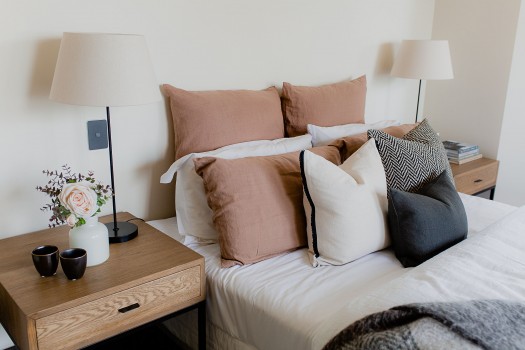
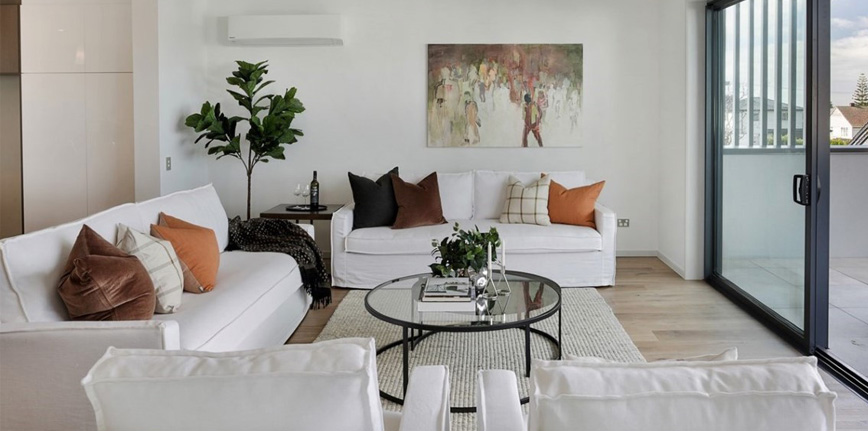
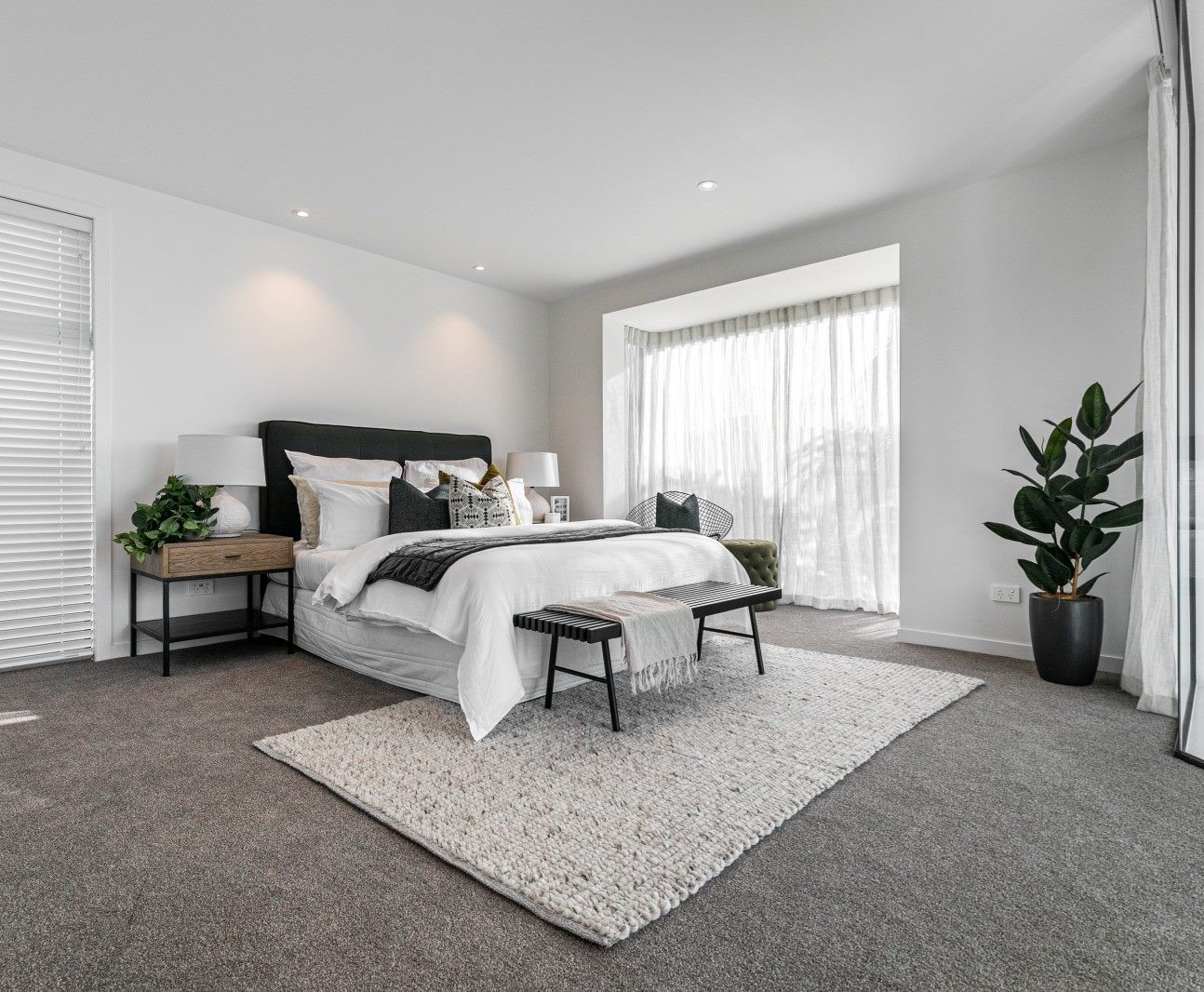
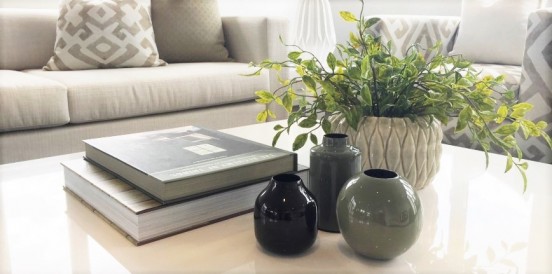
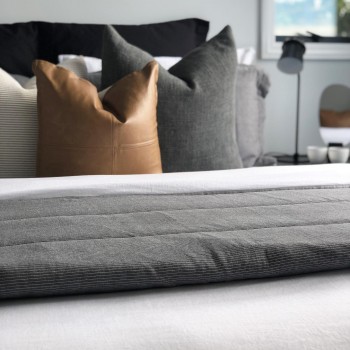
Pure minimalism, with its cold surfaces and empty rooms, has softened considerably. What Auckland homeowners are gravitating toward is something warmer: clean lines and uncluttered spaces, but with natural textures, earthy tones, and furniture with genuine presence. Think linen, solid timber, and handmade ceramics alongside considered negative space.
The result is a home that feels calm without feeling sterile. It is a style that rewards quality over quantity, which means the furniture you choose matters enormously.
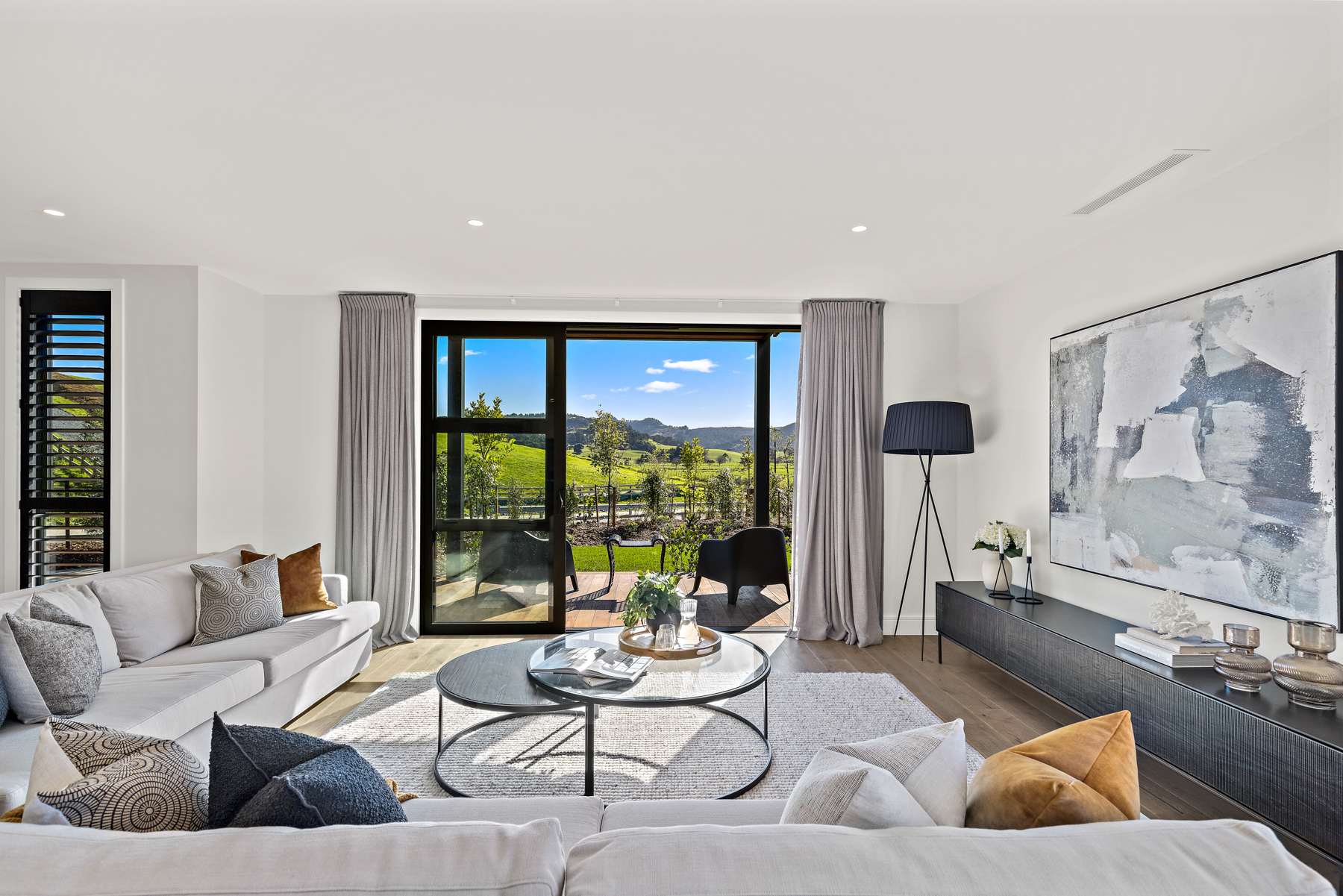
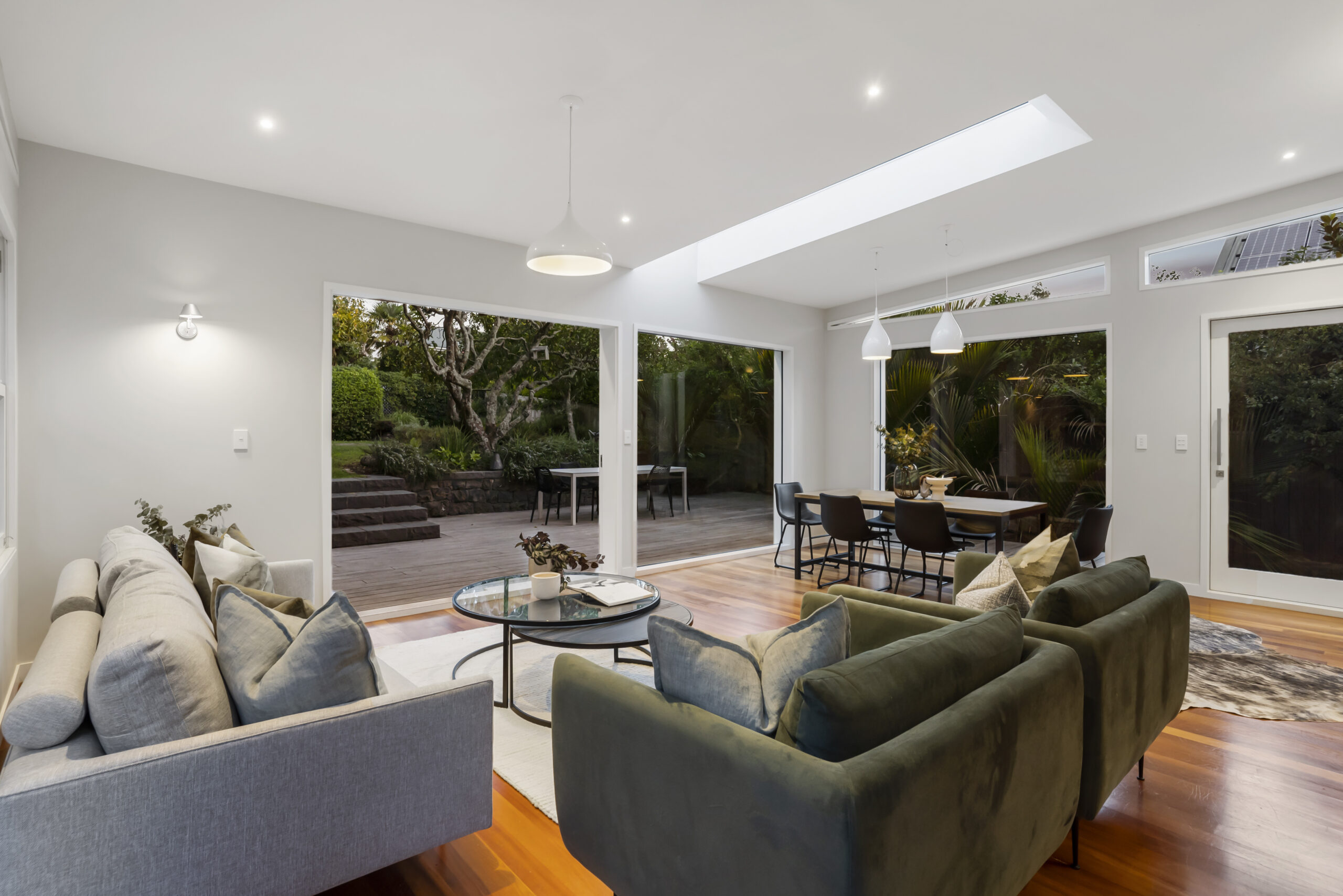
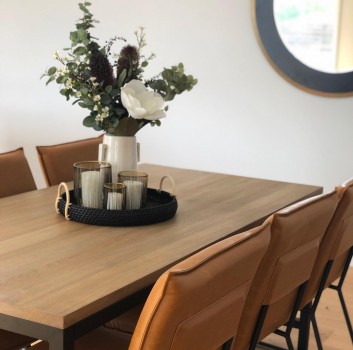
Biophilic design is the practice of bringing natural elements into interior spaces, and it has moved well beyond the indoor plant trend. Auckland's connection to the natural environment makes this a natural fit. In practice it means: natural materials throughout (stone, raw timber, rattan, wool, linen), views prioritised and framed rather than blocked, and colour palettes drawn from the local landscape.
Warm earth tones, muted greens and layered neutrals are increasingly appearing as foundational colours, with accent colours used selectively to add character.
For many Auckland homeowners, particularly those in villas and character homes, the challenge is honouring an older architectural style while furnishing in a way that feels contemporary. Transitional design does exactly that: it blends classic proportions and quality craftsmanship with cleaner lines and modern textiles. The result reads as timeless rather than dated or aggressively trendy.
Transitional interiors are one of the more technically demanding styles to get right, because the balance is delicate. Too far in either direction and it either feels old-fashioned or incongruous with the home's architecture.
Beyond the current moment, these are the broader styles that work well across Auckland's diverse housing stock.
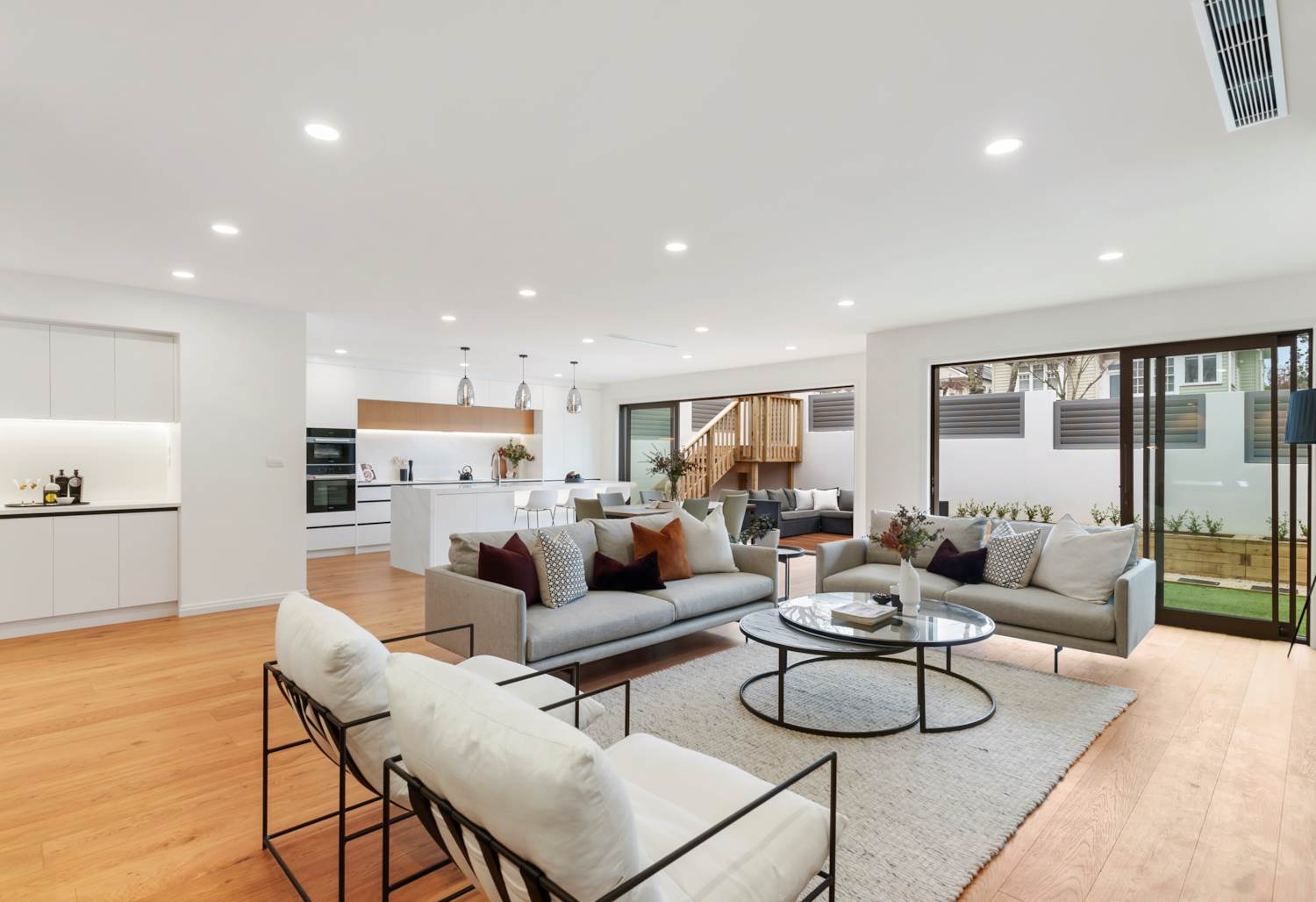
Contemporary: Clean geometry, restrained colour palette, and a focus on quality materials. Works well in modern apartments and new builds. The risk is feeling cold if not warmed up with texture and considered lighting.
Scandinavian: Functional, light-filled, and comfortable. Natural materials, neutral tones, and an emphasis on hygge (the Danish concept of cosiness). Translates well to Auckland's villa and bungalow heritage.
Japandi: A fusion of Japanese and Scandinavian sensibilities, combining Japanese minimalism and the beauty of imperfect materials with Scandinavian warmth and functionality. A growing influence in Auckland, particularly in homes where the architecture already favours simplicity.
Mid-Century Modern: Organic shapes, teak and walnut furniture, and warm ambers and oranges. Particularly strong in Auckland's post-war housing stock and character apartments.
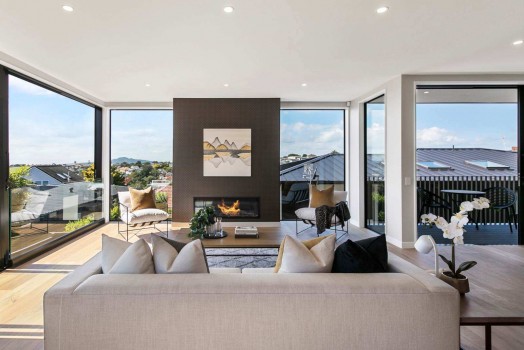
Coastal Contemporary: Not kitsch coastal but a sophisticated version: natural textures, soft blues and greens, open and airy layouts, and furniture that balances comfort with quality. One of the most requested styles for Auckland's beachside and harbour-view properties.
There is no shortcut here, but there are a few useful questions to start with.
What does your home's architecture suggest? A 1920s villa has proportions and character that work with certain styles and resist others. A contemporary townhouse invites a different approach. The architecture is the starting point, not an obstacle.
How do you actually live? Spaces that look exceptional in photographs but do not accommodate real life quickly become frustrating. A young family needs different furniture, fabrics, and layouts than a couple whose children have left home.
What do you want the space to feel like? Before thinking about style labels, think about atmosphere. Calm? Energising? Warm? Refined? Playful? The feeling comes first; the furniture and finishes that create it come second.
What will still feel right in ten years? Chasing the current moment in interior design often leads to expensive do-overs. A more considered approach is to build your room around quality, enduring pieces and introduce trend through textiles, lighting, and accessories that can be refreshed as your tastes evolve.
There is a real difference between an interior decorator and an interior designer, and it is worth understanding before you start a project.
An interior decorator focuses on surface finishes, accessories, and styling. An interior designer plans and furnishes an entire space: furniture selection and sourcing, spatial planning, window treatments, colour direction, and material specification. The outcome is a cohesive, fully considered interior rather than a collection of individual purchases that may or may not work together.
For homeowners in Auckland, the practical value of working with a professional interior designer comes down to a few things.
Access. A professional designer with strong trade relationships can source pieces that are simply not available through retail channels. This is particularly meaningful in Auckland, where the same furniture tends to circulate through the same handful of mainstream retailers.
Confidence. Making large furniture and fabric decisions without professional guidance carries real risk. A sofa in the wrong scale, a rug that pulls the wrong tone from the room, curtains that close off natural light rather than frame it: these are expensive mistakes that take years to live down.
Cohesion. Individual good decisions do not automatically add up to a well-designed room. Professional designers understand how elements relate to each other across a space, and how a room reads as a whole rather than as a sum of parts.
Thinking about working with an Auckland interior designer? Talk to The Look for a no-obligation conversation about your project.
The Look has been designing Auckland interiors since 2003. In over two decades of work across homes ranging from Grey Lynn bungalows to Eastern Bays villas, the approach has always been the same: understand how you live, understand what your home needs, and source the best possible furniture and furnishings to bring that vision to life.
One of The Look's strongest advantages is independence. The Look is not tied to any major furniture or homewares chain, which means the design team is not constrained by what is on the showroom floor. Instead, they draw on a local supplier network of literally hundreds of trade-only manufacturers, furniture makers, fabric houses, and blind and curtain specialists. The pieces clients receive are unique to each home, sourced specifically for the brief, often custom-made, and available at trade pricing.
The Look offers a full interior design service, including:
Every project is led by a named designer with a fine arts background and years of experience. It is a personal service, not a one-size-fits-all package.
Whether you are furnishing a new home from scratch, redesigning a single room, or working out how to make a character villa feel contemporary without losing its soul, The Look can help.
The process starts with a conversation. You talk about how you live, what you love, and what you are trying to achieve. From there, the design team works with you to develop a direction, present options, and manage the sourcing and installation of everything that goes into the space.
If you are ready to take the next step, get in touch with The Look today.
What is the difference between an interior designer and an interior decorator in Auckland? An interior designer furnishes and transforms entire spaces, handling furniture selection, spatial planning, and window treatments. An interior decorator works primarily with surface finishes and accessories. The Look is an interior design studio, offering full-service furnishing and design.
What interior design styles work best for Auckland villas? Transitional, Scandi, and warm minimalist styles tend to work well in Auckland villas, as they respect the home's proportions and architectural character while furnishing in a way that feels contemporary. The right approach depends on the specific property and how the owners want to live.
How do I get access to trade-only furniture in Auckland? Working with a professional interior designer is the most reliable way to access trade-only suppliers. The Look has relationships with hundreds of local trade-only manufacturers, furniture makers, and fabric houses, giving clients access to pieces unavailable through mainstream retail.
How long does an interior design project take? It varies considerably depending on the scope of work. A single room refresh may take a few weeks; a full home furnishing project may take several months, particularly if custom furniture is involved. The Look works to realistic timescales and keeps clients informed throughout.
Does The Look work outside Auckland's central suburbs? Yes. The Look's team works across Greater Auckland and beyond, including the North Shore, Eastern Bays, West Auckland, and further afield for larger projects.