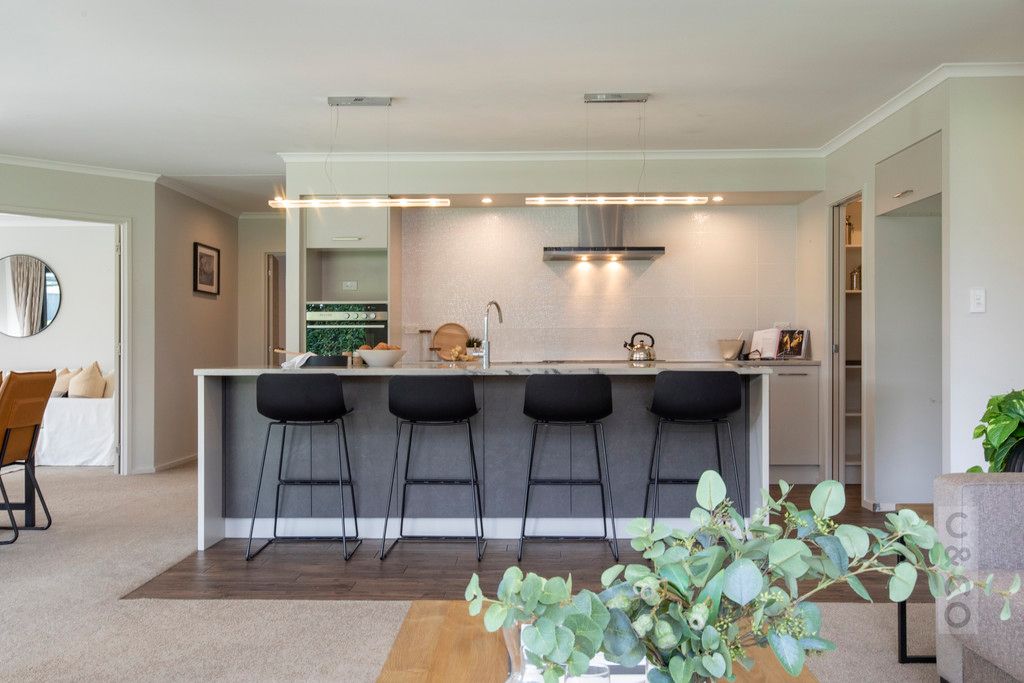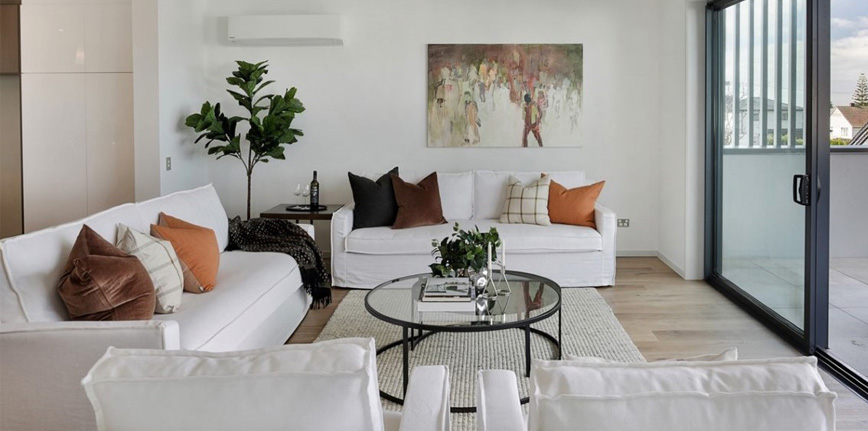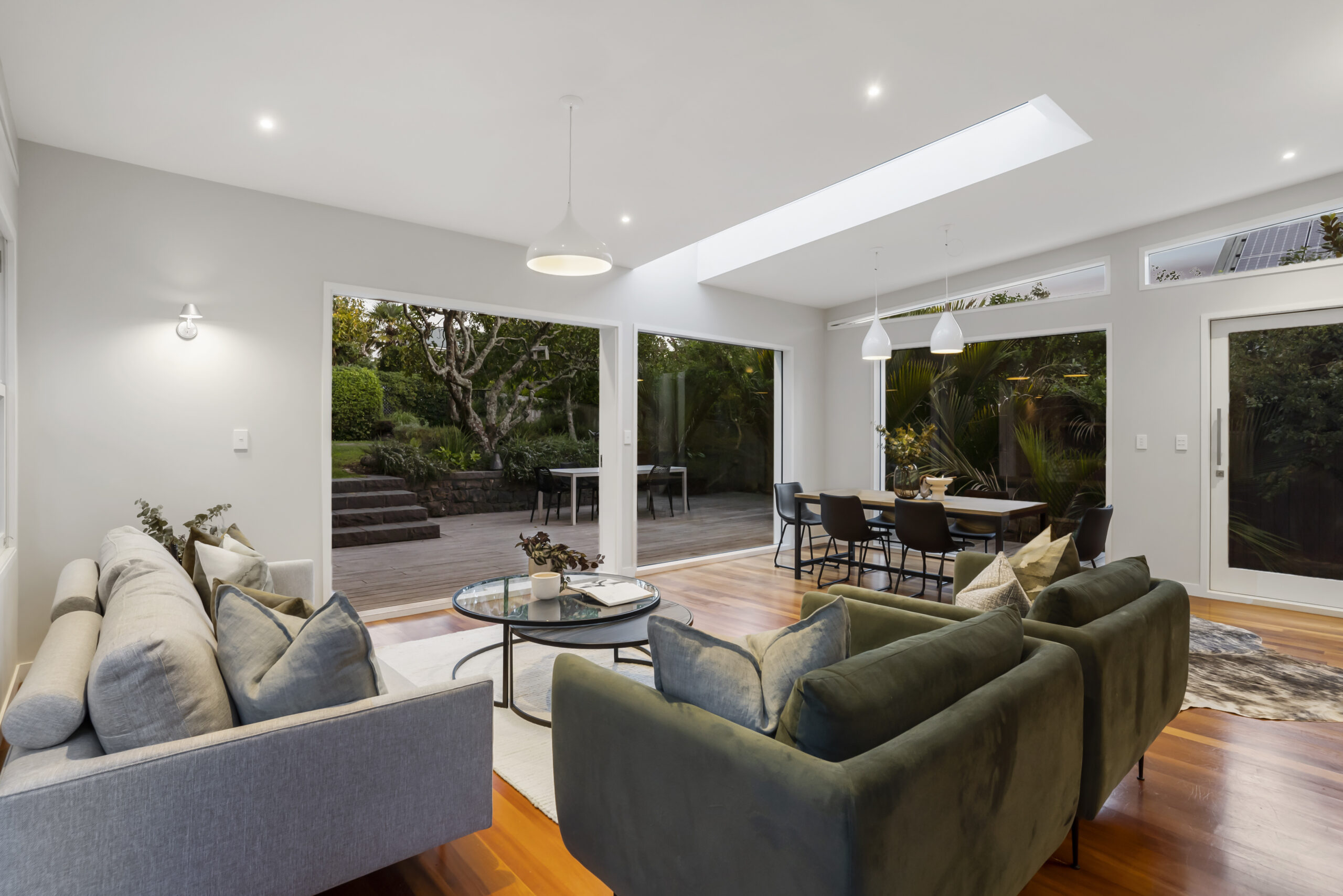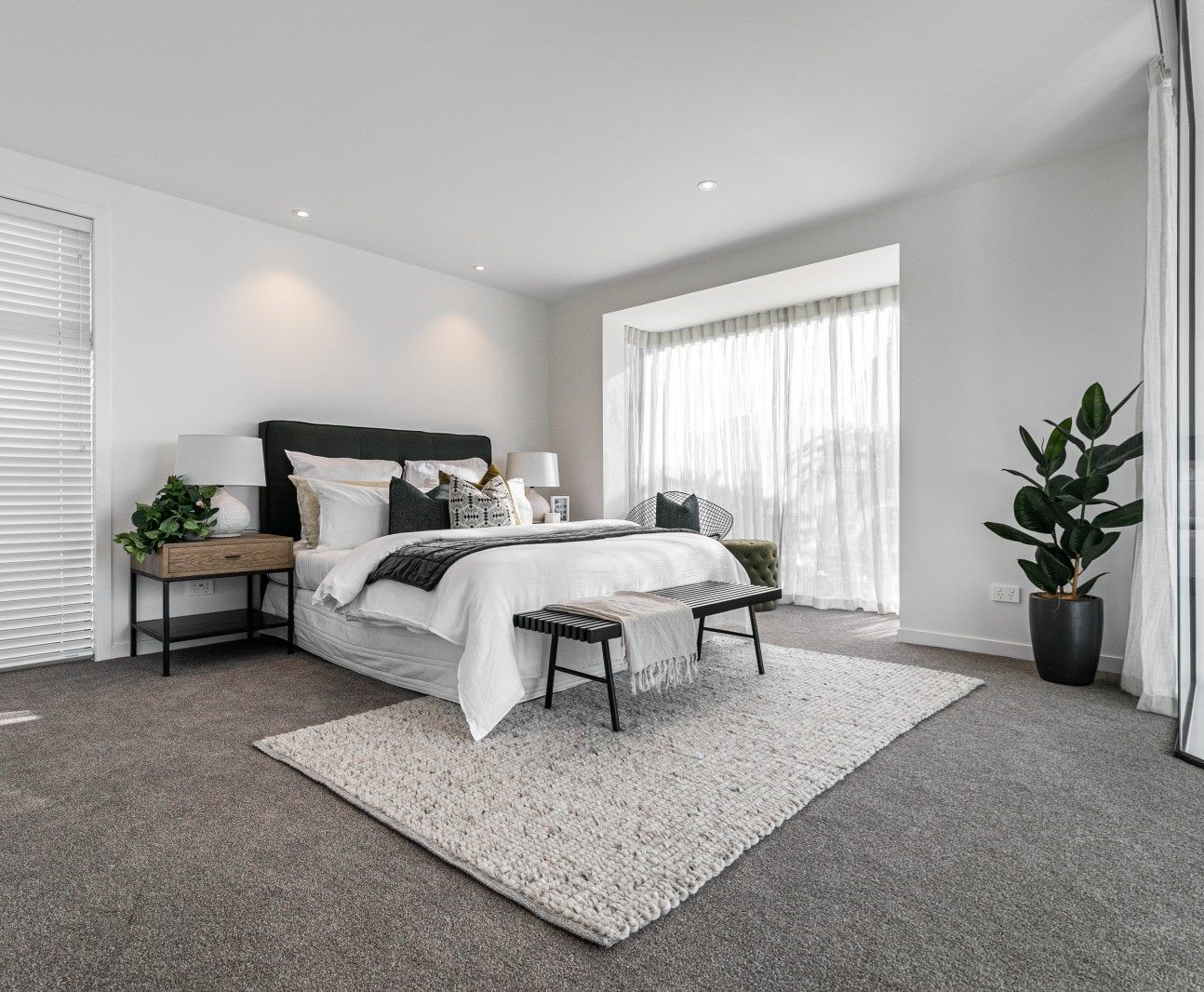
The short answer: an empty living room almost never looks bigger. It looks smaller, colder and harder to read, because buyers judge scale by the furniture in a room and a bare floor gives them nothing to judge by. Professional staging replaces the missing information, which is why vacant properties are where staging earns the most.
We have been staging Auckland homes since 2003, and we only stage vacant properties. This article covers why empty living rooms underperform, what professional staging actually involves, how the process runs, and the questions worth asking before you book anyone.
It seems logical that clearing a room out would make it feel larger. In practice it rarely does, and five things go wrong at once.
There is nothing to connect to. People buy the life they imagine in a home. An empty room offers nothing to imagine, so buyers stay in assessment mode rather than moving into wanting it. A staged room shows buyers how they could live there, sitting back with a cool drink at the end of the day.
Size becomes guesswork. Buyers read scale from furniture. Without a sofa or a rug for reference, a living room can look smaller than it is, or large and cold, and buyers cannot tell whether their own things would fit. Uncertainty does not produce offers.
Purpose is unclear. Is there room for a dining setting as well? A reading corner? A desk by the window? Most buyers will not work this out standing in an empty room, and a room they cannot picture using is a room they walk past.
Flaws become the focal point. Marks on the walls, a patched section of floor, an awkward corner, a room shape that does not quite make sense. With nothing else to look at, the eye goes straight to the problem.
The room sounds wrong. Bare floors and blank walls echo. Buyers rarely register it consciously, but a hollow room feels cold and unlived in, and people do not linger in a space that feels like that. Rugs, upholstery and curtains absorb sound and change how long someone stays.
We saw all five at once on a project in the Eastern Bays, where a developer had built seven multi-million dollar penthouses and marketed them throughout construction without a single sale. The apartments were finished to a very high standard and completely empty. Once they were staged and photographed properly, they began to sell.
Staging an empty property suits more sellers than most people assume:
No two empty living rooms present the same problem, and the approach changes with the house.
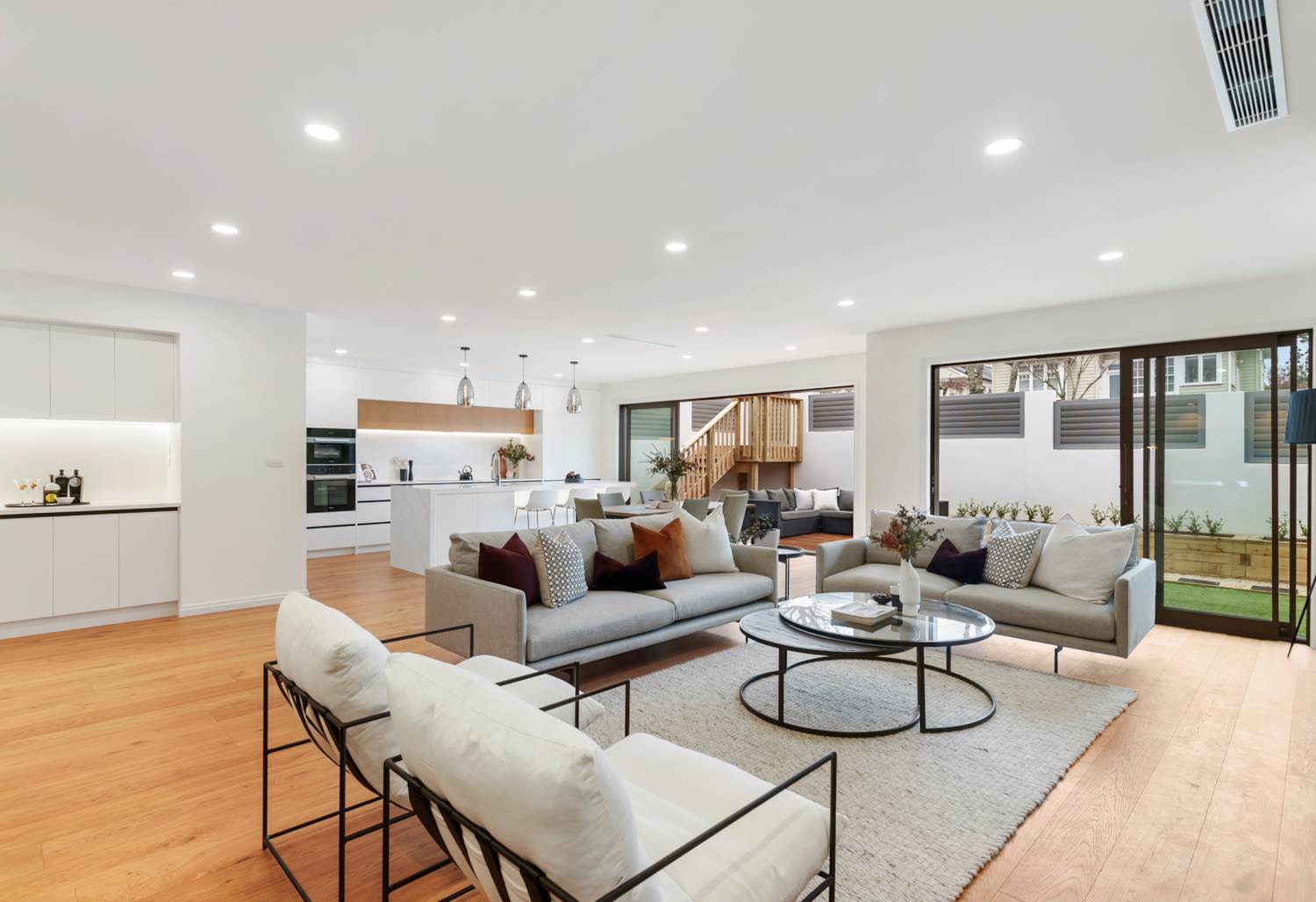
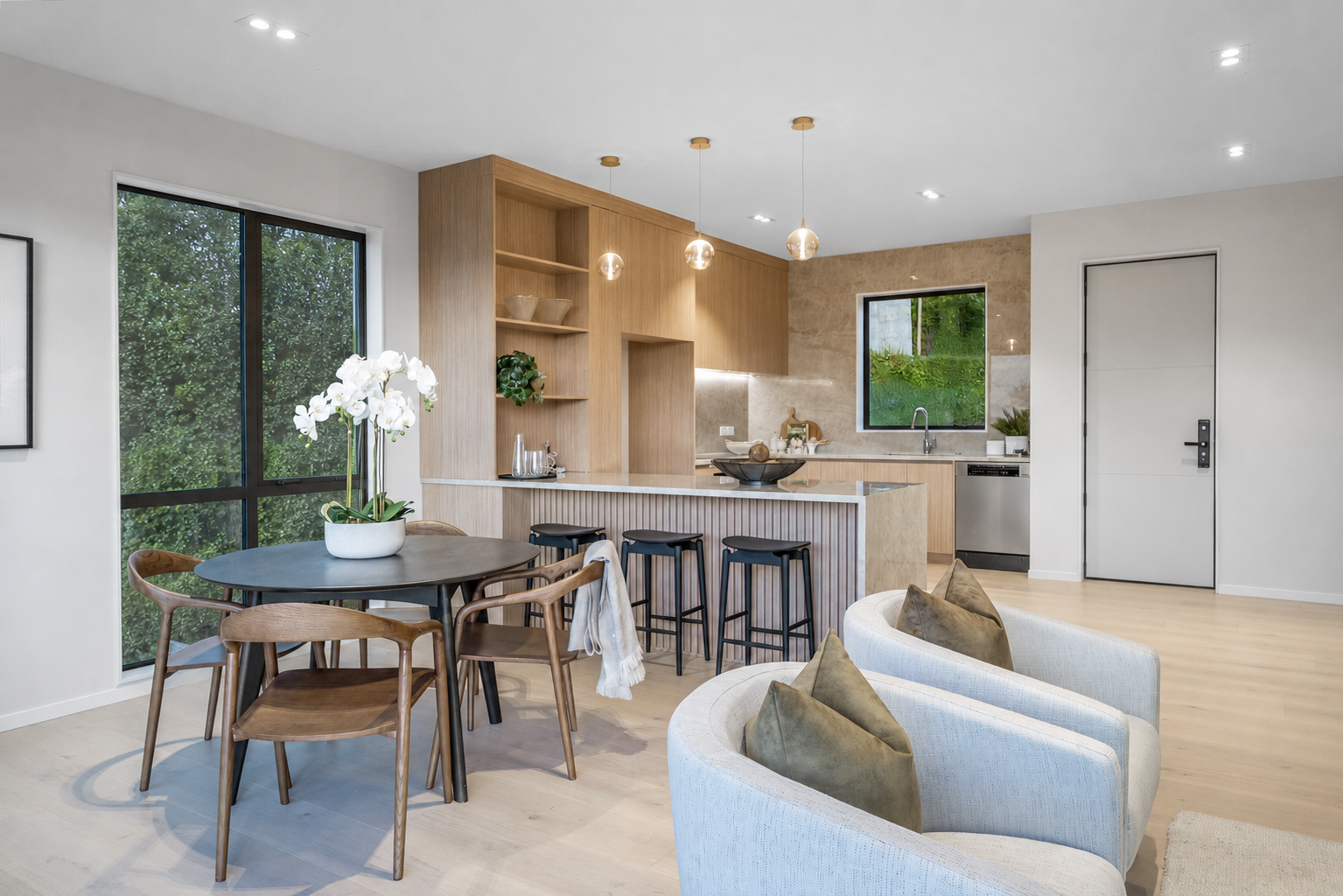
In a large open space, buyers struggle to see where the living area ends and the dining or kitchen zone begins. Furniture placement and rugs define each zone so the space reads as organised rather than as one big empty box.
In a compact living area every piece has to earn its place. Correctly scaled furniture shows buyers the room can be comfortable and practical without crowding it, which is a harder trick than it sounds.
High ceilings, bay windows and original fireplaces are the reason someone is buying a villa. Staging is chosen to let those features lead rather than compete with them.
Modern homes can read as clean but impersonal. Texture and warmth help buyers see a home rather than a blank canvas.
Staging a vacant living room is not filling it with furniture. It is a design job, and most of the decisions happen before anything arrives.
The stager starts with the room: its proportions, windows, doors and traffic flow. The layout is planned so there is a defined seating area, comfortable walkways, and a clear sense of how someone would move through the space.
Scale does the heavy lifting. Oversized pieces crowd a room, and undersized pieces make it look emptier than it already is. Furniture is selected for the proportions of the space and the style of the house.
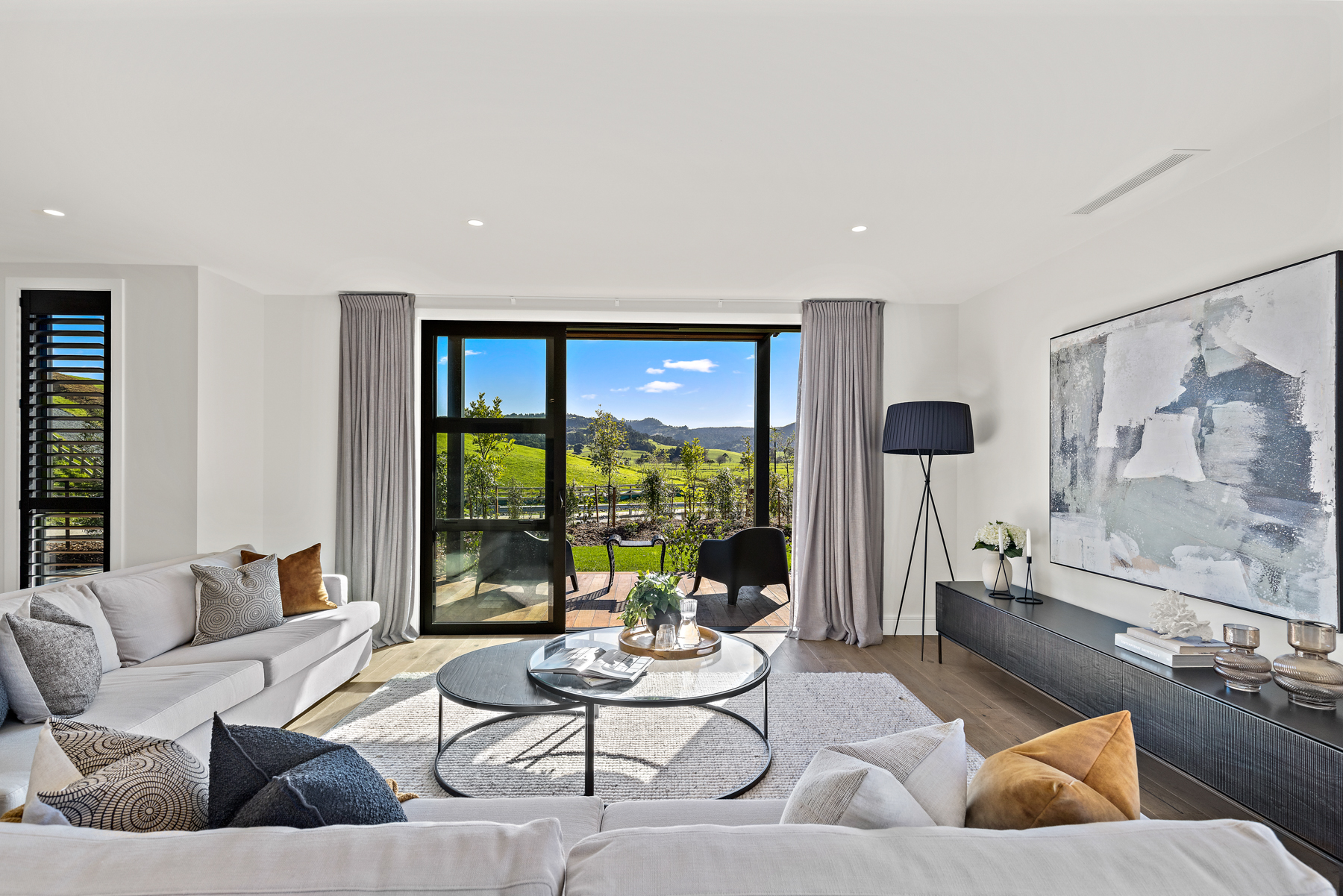
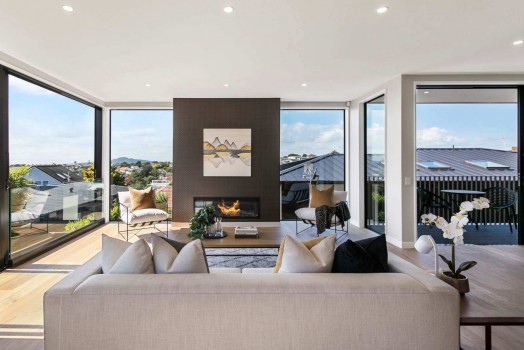
A fireplace, a wall of windows, a view. Furniture and styling are arranged around that feature so it works both in person and through a camera lens.
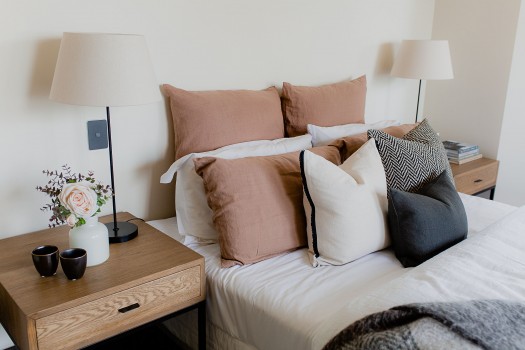
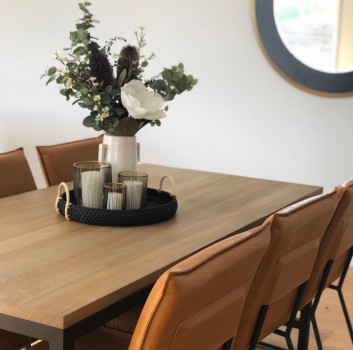
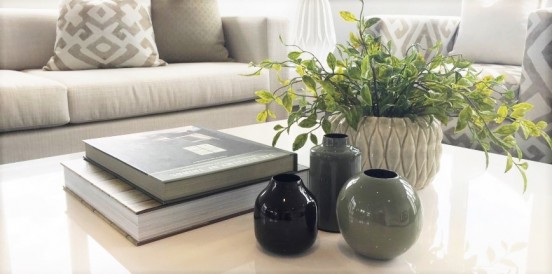
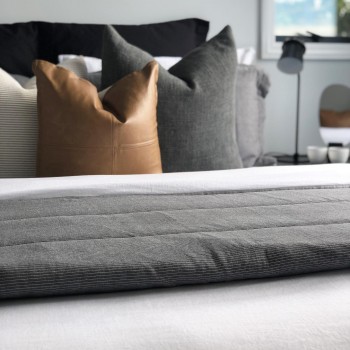
Colour, texture and styling are chosen together. A restrained palette layered with wool, linen and timber appeals broadly. Rugs, artwork, cushions and greenery finish the room so it feels complete without feeling like somebody else's taste.
Most Auckland buyers see the living room online before they ever stand in it, and the photograph decides whether they attend at all. Staged furniture gives the camera something to work with. An empty room photographs flat no matter how good the photographer is. This is covered in more depth in our guide to what buyers actually notice first.
Good staging is not about the stager's taste. It is about the people most likely to buy this particular property.
A city apartment usually calls for something contemporary and streamlined, aimed at professionals and investors. A family home in an established suburb wants something warmer and more relaxed. The price point, the suburb and the likely buyer all feed into the scheme, which is the difference between professional staging and putting furniture in a room.
Because the property is already empty, this is simpler than most sellers expect. There is nothing to work around and no disruption to anyone's daily life.
Preparation, styling, transport, insurance, packup, removal and all furniture and accessories are included in the quote. There are no additional costs added later.
Putting a few of your own pieces back into an empty room can help, but it comes with real problems:
Staging companies differ more than their websites suggest. These are the questions worth asking, and where we stand on each:
Do you supply the furniture, or hire it in? We own our inventory, which spans contemporary through to classic, so the scheme is built from stock we know rather than whatever a hire company has free that week.
Do you focus on vacant properties? Yes. We only stage vacant properties, and our focus is on delivering results through quality furniture and furnishings. That means our stock is always as new, never lived in.
Can I see similar living rooms you have staged? Our portfolio covers apartments, villas, family homes and holiday homes from central Auckland out to Omaha and the Coromandel, and our client testimonials are worth a read alongside it.
How long does staging stay, and what if the sale runs long? Five weeks as standard, with extensions available by the week if your campaign needs longer.
How far ahead do I need to book? At least two weeks before your photography date. We can move faster in an emergency, but it narrows what we can put in the room.
What is included in the quote? Everything listed in the process above. The figure you are quoted is the figure you pay, and our staging page sets out what that covers.
A company that specialises in vacant properties should be able to answer all six without hesitating.
Before your listing photography, always. The first images buyers see should already show the room at its best, because a listing that launches with empty photographs has spent its best week before anyone walked through the door.
Staging later is possible, and we do it regularly for properties that have stalled. It works, but the first fortnight of a campaign carries more weight than the rest of it combined, and that is a hard week to get back.
Generally no. An empty room can work if the layout is obvious and the space is unusually well proportioned, but most buyers find bare rooms harder to read and harder to connect with. Staging gives the room scale and purpose.
It makes it easier to judge, which usually reads as bigger. Correctly proportioned furniture gives buyers a reference point, and a room they can measure against something familiar feels larger than a bare floor with nothing in it.
Most sellers stage the entire property. Staging just a room or two can save a little money, but it can take away from the property's impact and marketing potential. Remember, selling a property is generally the biggest single financial transaction you will ever make.
Yes. A property that has been tenanted for years tends to look worn, and staging helps buyers see a home rather than a rental. Selling between tenants is the natural window for it.
Yes, and it is where we specialise. New builds are clean and well finished but can feel impersonal, and staging gives buyers a sense of how the rooms are meant to be lived in. We also offer dedicated, structured pricing for property developers.
A vacant living room has all the potential in the world and no way of communicating it. Staging supplies the scale, the warmth and the sense of purpose that the empty room cannot, and it gives your listing photographs something worth looking at.
If your property is empty and you want it presenting properly from the first photograph, request a free onsite quote. We will walk the property with you and tell you exactly what it needs.